
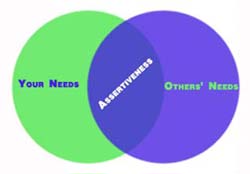
Below are five assertiveness techniques anyone can use in the pursuit of more effective and clear communication, setting boundaries and learning to say ‘no':
1. Good eye contact
Being able to maintain good eye contact is important when trying to be assertive. Good eye contact communicates attention and respect, while a lack of eye contact displays nervousness and disinterest in what the other person is saying.
It is also worth noting that too much eye contact can appear confrontational and aggressive.
2. Maintaining your personal space
Not letting people encroach on your personal space and make you feel uncomfortable is another important part of being assertive. By having the confidence to enforce your boundaries, either verbally or otherwise, you set the precedent for a mutually respectful relationship.
3. Asking people for feedback
Asking for feedback from the people you are talking to is a great way of ensuring that what you meant is what was understood. Simply asking, "Does this make sense to you?" or "How do you feel about that?" shows the listener that you are taking an interest in their thoughts and shows that your request or suggestion is not a demand, and also affirms that you have been clearly understood.
4. Good posture
Your posture when being assertive should always be up right (but not up tight) and open. Crossed arms and legs indicate nervousness, while an open posture displays receptiveness.
5. Tone of voice
It is important to maintain a steady, well-paced tone of voice when being assertive. Many of us have the tendency to speak too quickly when we are nervous, or aggressively when we feel threatened etc., but for our assertive communication to be effective it needs to be delivered in a controlled way.
This means speaking slowly, clearly and in an easily understandable way.
Find out more about assertiveness training by clicking here.